
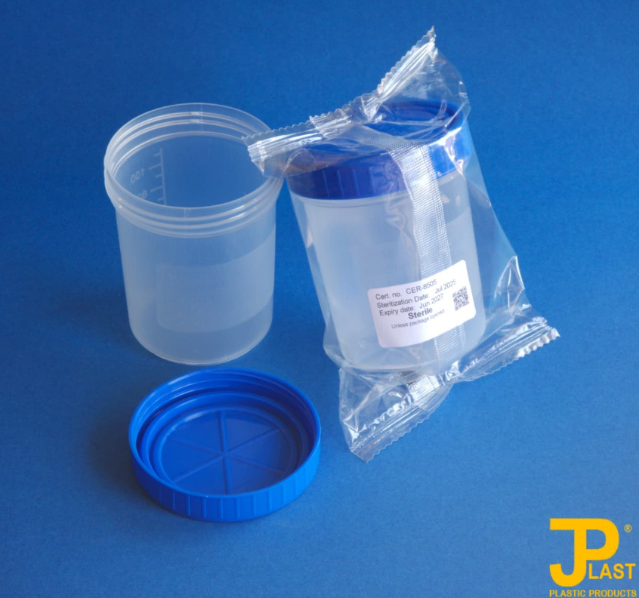
Matching Containers to Laboratory Applications
Laboratory sample containers play an important role in how samples are collected, handled and stored. Although the container itself may appear to be a relatively simple part of the process, its material, size, design and suitability for the intended application can all affect day-to-day laboratory handling.
The right container should provide dependable containment while being practical for the people who need to collect, transport, access or store the sample. Different laboratory applications may also expose containers to chemicals, changing temperatures or repeated handling, making appropriate product selection even more important.
For laboratories and medical facilities in South Africa, selecting plastic sample containers according to the actual application helps create more organised, reliable and efficient working processes.
Start with the Sample and Its Requirements
Container selection should begin with understanding what will be placed inside it.
A laboratory may handle liquids, powders, solids or other materials, and each application can have different requirements.
Before selecting a container, consider:
- The type of sample or material
- The required container capacity
- How long the material will be stored
- Whether it will be transported
- Expected storage temperatures
- The material’s compatibility with the container
- How frequently the container will be handled or opened
Understanding these requirements helps narrow the available options and reduces the risk of selecting a container simply because it is convenient or readily available.
Supporting Reliable Sample Handling
Laboratory containers often move through several stages during their use. A sample may be collected in one area, transported elsewhere, stored and then accessed again for testing or processing.
This means practical handling matters.
A suitable plastic sample container should support the intended workflow without creating unnecessary difficulties. Depending on the application, considerations can include the container’s shape, opening, capacity and closure.
A container that is appropriate for storage may not necessarily be the most practical choice for frequent dispensing or repeated access.
Matching the product to the workflow can therefore improve both usability and efficiency.
Why Container Material Matters
J Plast supplies products manufactured from a variety of plastics, including commonly used materials such as polypropylene (PP), high-density polyethylene (HDPE) and low-density polyethylene (LDPE).
Each has different characteristics.
Polypropylene (PP)
PP provides a useful combination of strength and chemical resistance and is widely used for laboratory plasticware.
Depending on the specific product and application, it can provide a practical option where rigidity and dependable performance are important.
High Density Polyethylene (HDPE)
HDPE offers good strength and resistance to many chemicals. It is commonly used for bottles, jars and containers where durability is required.
Its impact resistance also makes it useful where products will experience regular handling.
Low Density Polyethylene (LDPE)
LDPE is generally more flexible than HDPE. This flexibility can make it useful for applications where a softer or squeezable plastic product is preferred.
The correct choice should always depend on the application rather than assuming that one material is suitable for every requirement.
Consider Chemical Compatibility
If a sample or substance will come into direct contact with the container, compatibility between the contents and plastic material needs to be considered.
Exposure to an unsuitable substance can potentially affect the plastic over time.
Possible signs of incompatibility can include:
- Softening
- Swelling
- Discolouration
- Cracking
- Changes to the container’s structural integrity
Chemical type, concentration, temperature and contact duration can all influence compatibility.
This is one reason why knowledge of plastic properties is valuable when selecting laboratory storage containers.
Storage Requirements Should Influence Selection
The conditions under which a container will be stored are another important consideration.
Some laboratory materials remain at room temperature, while others may require cooler environments or specific storage arrangements.
When evaluating laboratory storage containers, consider:
- Expected storage temperature
- Length of storage
- Available shelf or storage space
- Whether containers need to be organised together
- How often the contents need to be accessed
Storage planning can also influence container size. Using excessively large containers for small quantities can waste valuable laboratory space, while containers that are too small can make handling unnecessarily difficult.
Closures Are Part of the Container System
The container body is only one part of effective sample storage. The closure also needs to be suitable for the application.
A closure should fit correctly and provide the level of containment required for the intended use.
Factors to consider include:
- Frequency of opening and closing
- Ease of access
- Potential for leakage
- Compatibility with the stored substance
- Handling and transport requirements
Selecting a container and closure as a complete system helps support more dependable storage and handling.
Organisation Makes Laboratory Storage More Efficient
The right containers can also contribute to better organisation.
Consistent container types and appropriate sizes make it easier to establish logical storage systems. This can help laboratory personnel identify, arrange and access materials more efficiently.
Good organisation can support:
- Faster retrieval
- Better use of storage space
- Easier stock management
- Reduced unnecessary handling
- More orderly work areas
Containers therefore contribute not only to sample containment but also to the efficiency of the broader laboratory environment.
Avoiding Common Container Selection Mistakes
Several simple mistakes can make laboratory storage less effective.
These include:
- Choosing based on size alone
- Assuming all plastics have the same properties
- Ignoring chemical compatibility
- Overlooking storage temperatures
- Failing to consider the closure
- Selecting a product without considering how it will be handled
A more considered approach helps ensure the product is appropriate from the beginning.
Long-Term Reliability Matters
Laboratories frequently depend on plasticware throughout their daily operations. Consistency and dependable supply therefore matter, particularly when a specific container has become part of an established workflow.
Suitable products should provide reliable performance for their intended application and help minimise unnecessary product changes or replacements.
For procurement teams, this means looking beyond the immediate purchase and considering how well the container supports ongoing laboratory requirements.
Why Choose J Plast for Laboratory Containers and Jars
J Plast specialises in the import, manufacturing and distribution of general laboratory and medical laboratory plasticware, alongside a broader range of plastic products.
The J Plast range includes containers and jars suitable for different laboratory and general applications, backed by extensive knowledge of plastics and their properties.
J Plast can also assist customers requiring converted or custom-built plastic products where a standard option does not meet the specific requirement.
“The right container starts with understanding what the application actually needs.”